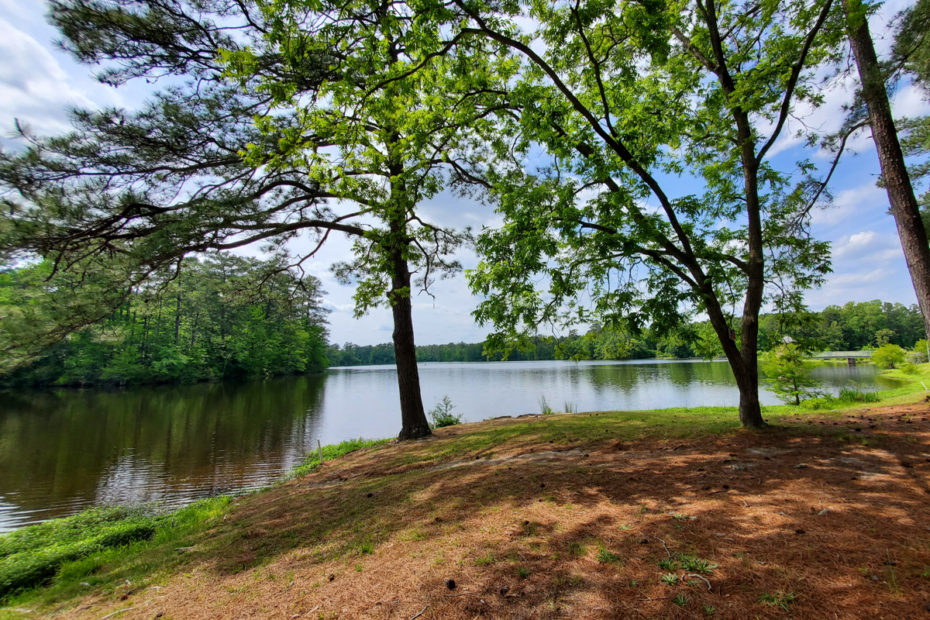
The City of Suffolk touts Cluster Developments as a way to conserve environmentally sensitive areas, but is it just a developer give-away in disguise?
The idea behind a Cluster Development is to build homes closer together to free up more land for open space or to preserve wetlands. Normal city codes have regulations on minimum lot sizes and road frontage requirements. However, in a Cluster Development, many of those regulations are waived to allow a developer to build houses closer together.
If a developer has 100 acres and could normally build 300 houses on that land, this allows the developer to condense the housing portion and put those 300 houses on 70 acres and then leave 30 acres undeveloped. That all sounds reasonable and when seen in this light, it does seem to provide more open space.
However, if that same developer has 100 acres, but he would be prohibited from building on 30 of those acres of that land due natural impediments or because of local, state, or federal regulations, he would have to reduce the number of houses he could build. He would have 70 acres and he would have to abide by the city codes that dictate lot size and road frontage. He would not be able to fit those same 300 houses within that 70 acres with those restrictions and he would have to build fewer houses.
Cluster Developments allow the developer to use all the land that is part of the parcel to determine density, even if some of it can’t be built on. The city then waives the normal city regulations for lot size and road frontage. Thus, the cluster development allows the developer to build more houses than he would otherwise be able to build.
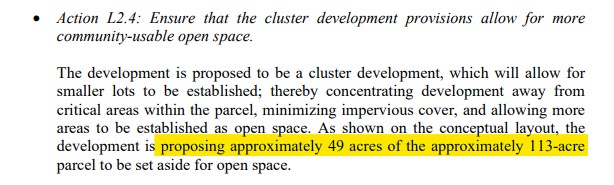
This happens a lot in Suffolk. It is happening with this Manning Road rezoning (Public Hearing on Wednesday at 6pm at City Hall). The developer has 113 acres, but that land has a railroad cutting off a huge chunk, it has a perennial stream, open water and wetlands. In all, there are 49 acres that the developer can NOT actually build on.
These are not 49 acres he is choosing to leave open. He has no choice because he can’t build within 100 feet of the water because it is a drinking reservoir and has a required buffer. This 100 foot buffer also follows the stream that bisects his property. In addition, he has no legal right to cross the railroad tracks that divide his property. In reality the developer has 64 acres that he can actually build on.
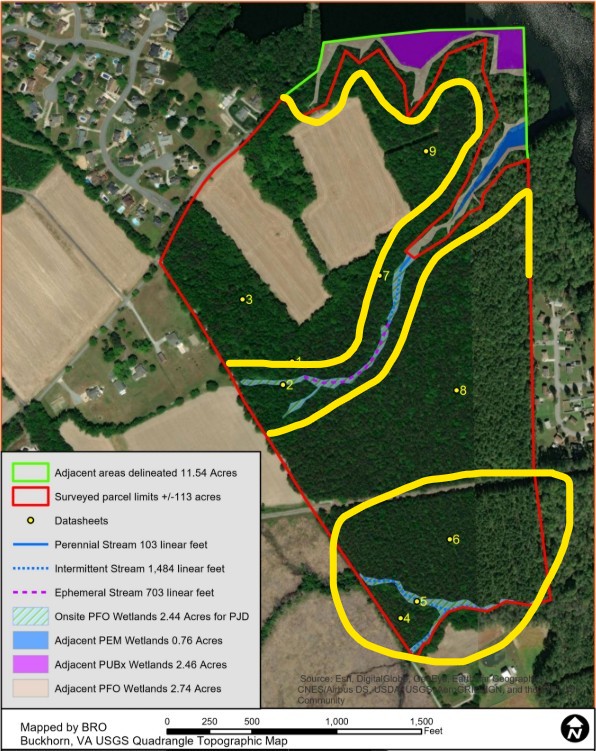
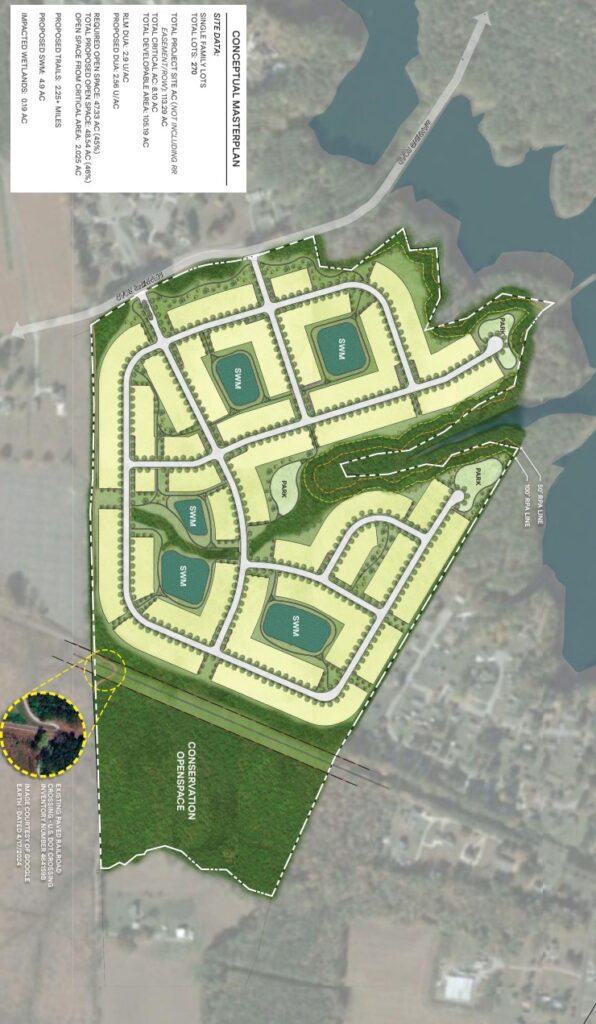
The city allows the developer to include the non-developable land in the calculation for density. Additionally, the city allows a density of 2.9 houses per acre for the residential zoning of RLM, which the developer is asking for in this rezoning request. The current zoning of A (agriculture) would only allow him to build at most 5 houses on the land. The total maximum number of houses that can be built on 113 acres at a density of 2.9 is 327 houses. He was asking for 300, but has since reduced it to 270 houses. But remember, he can only build on 64 acres. Those 270 houses will be squished onto those 64 acres at an actual density of 3.9 houses per acre!
That 64 acres is about the same size as the neighborhood across the street. That neighborhood was rezoned in the late 1980s back when the city was concerned with large density on parcels that abut drinking reservoirs. That neighborhood has 76 houses with a density of around 1 house per acre. If this Manning Road parcel is rezoned, it would share a zoning category with the other neighborhood of RLM. However, the density differences are 1 house per acre in the old development versus 4 houses per acre in the new proposed development. The old neighborhood is NOT a cluster development. Which development will have more negative impacts on the environmentally sensitive wetlands and drinking reservoir?
The city knows that higher density negatively impacts the water quality of the drinking reservoirs, which in turn can negatively impact the health of the citizens. They know this and used to avoid this type of density. Those days are gone.
Now the city and the developers think they are fooling us by saying cluster developments help preserve environmentally sensitive areas. It isn’t true. It is allowing the developers to put higher density on these parcels adjoining these environmentally sensitive areas that nature and existing regulation would otherwise curtail.
It turns out, cluster developments are just another tactic to help developers at the expense of the environment and safety of the citizens.