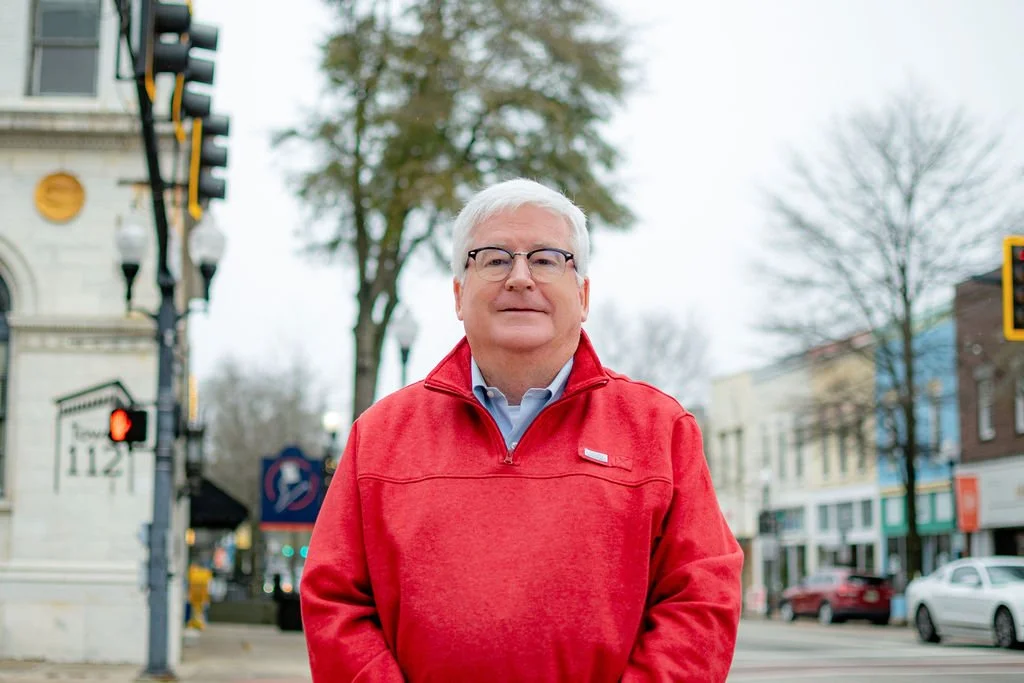
Care4Suffolk is a nonpartisan organization and does not endorse any candidate for any public office. We encourage voters to research the candidates for the upcoming local City Council Member elections. We have asked all candidates the same questions regarding land use and rezoning. These questions are based on the topics and issues from participating members. Below are the answers provided by the Suffolk Borough City Council candidates, along with their image and website contact, if they chose to provide it.
Early voting begins Friday, September 18th and election day is Tuesday, November 3rd. Please go to the Virginia Department of Elections for any questions.
Note: Questionnaires were sent to all candidates. Current School Board Member Tyron Riddick, running for City Council Suffolk Borough did not provide a response.
Suffolk Borough City Council Candidates

PRIORITIES
What do you consider the top two issues/needs of the City? What do you think is the top issue/need for your borough? How do you plan to address these issues/needs?
Dwight James
My top two priorities are bringing infrastructure up to the needs of our residents and restoring accountability in how Suffolk grows and spends taxpayer money. Roads, schools, drainage, and public safety must be central to development decisions. Every approval should answer a basic question: Can we support this growth without lowering the quality of life for the people already here?
For the Suffolk Borough, my highest priority is reinvesting in existing neighborhoods. That includes school facilities, safer streets and sidewalks, drainage, and a downtown where local businesses can succeed.
I would use the budget and capital improvement process to push for projects ranked by condition, safety, and community need, with public timelines and progress reports. I would also support clearer permitting procedures and responsible investment that protects farm lands. Our residents deserve to see their needs reflected in where their money goes.
John Rector
The top issues facing Suffolk today is number one how to we preserve our agricultural heritage during this time that we are the place where everyone wants to live. The second issue, facing my borough at least, is how to maintain and stabilize the core downtown. To address issue number one above, I fully supported the creation of the Agricultural Committee and the hiring of an Agriculture Specialist to help promote the many opportunities to expand our agribusiness/agritourism. I will continue to oppose most solar farm applications as I have stated many times in the past that solar is a poor swap for good agricultural land. I will also continue to promote the growth in those areas that are within the comprehensive plan.
For priority number two. I will continue to support the newly formed Downtown Advisory Committee and the new Downtown Coordinator. This group has been busy updating the Downtown Master Plan to reflect current trends in downtown revitalization efforts. We have established an Arts & Cultural district downtown and are forming a nonprofit group to be able to take advantage of outside grant opportunities. I will continue to work with the City Manager to explore ways to make it easier for a business to locate in Suffolk by making the permitting process easier to follow and understand.
HOT TOPICS
1. There is currently a temporary ban on data centers in Suffolk. It will likely be the 2027 Council that votes on changes to the UDO (Unified Development Ordinances) regarding data centers. What do you consider to be the biggest issues that the city will need to address regarding data centers and how can that be accomplished within the UDO framework?
2. Northern Suffolk has seen a tremendous amount of growth in the past two decades, and the 2045 Comprehensive Plan adopted by Council in 2024 has added additional density to the land use in that area. The City has created some additional capacity to Rt. 17 (Bridge Rd), but there is more growth coming. Plans to expand Bridge Rd are in the CIP, but any widening of Bridge Road must necessarily narrow at the two bridges on Bridge Rd. What will you do on Council to ensure that the City can widen those bridges to truly accommodate the increased traffic from development? If the bridges can’t (or won’t) be widened, how will you approach rezoning applications for projects that will increase density in northern Suffolk? What are your views on a replacement for the Kings Highway Bridge?
Dwight James
1. I do not support data centers in Suffolk. My priority is protecting our neighborhoods, farm lands, water resources, and residents’ quality of life. Promised tax revenue does not outweigh my concerns about electricity and water demand, constant equipment noise, and infrastructure costs.
I would oppose UDO changes that allow data centers and work with the city attorney to pursue the strongest legally defensible restrictions, including a prohibition wherever permitted by law.
Suffolk should focus on development that meets community needs, supports local businesses, and creates lasting opportunities without placing additional burdens on residents. Data centers are not the direction I want for our city.
2. Widening a road without addressing its bridge bottlenecks does not solve the entire problem. I would push for a coordinated corridor plan that evaluates the bridges, intersections, evacuation needs, and traffic from developments already approved but not yet built.
I would work with regional transportation partners, VDOT, and our state and federal representatives to pursue funding. Residents should receive clear information about feasibility, costs, funding gaps, and realistic construction schedules. A project appearing in the CIP is not enough; we need to know how it will be delivered.
If the bridges cannot be widened and no credible alternative can accommodate additional traffic, I would oppose rezonings that add density beyond the corridor’s capacity. Lower density or phased development should be considered only when supported by reliable analysis and enforceable conditions.
I support pursuing a replacement for Kings Highway Bridge, subject to a transparent funding and environmental review. It should improve connections for existing residents, without becoming an excuse to approve more growth than surrounding roads can support.
John Rector
1. I made the motion to direct the Planning Commission to draft an ordinance putting a moratorium on all applications for data centers. I did this because there is not enough known about these centers and there is not any language in the U.D.O. that specifically addresses data centers. We learned from our experiences with solar farms that there were issues involved with them that were not contemplated or expected. After careful review, we will work on an ordinance that closely aligns with what will work best for the citizens of Suffolk. Unfortunately, in our modern world, data centers are needed but they should not come to Suffolk at the expense of our citizens in the form of higher utility cost.
2. Northern Suffolk has obviously seen most of our explosive growth. Along with our own growth, Isle of Wight has also seen significant growth on their end of Route 17. That is why I attend regular meetings with our neighboring cities as the expansion of the bridges is going to be a major undertaking which translates into major cost. We are part of the region, and we will need state and Federal money to assist us with these efforts.
As far as growth in those areas is concerned any rezoning in the Hobson/Eclipse peninsula area would have to be of such a nature and density that it would not contribute to what is already a problem. That area of Suffolk along the river and creeks is some of our most valuable areas and needs to be preserved for what it is.
I support the kings Highway bridge replacement plan but obviously money and how to get it done are significant hurdles to overcome. The last estimate that I saw put the cost at about $186 million, but the council needs to work hard to make it happen.
FISCAL RESPONSIBILITY
City Council approved the Port 460 rezoning project back in 2022. It is now known that there are issues with public water to the site, stormwater management issues, and increased costs for road improvements which will be borne by taxpayers. The City is currently working on creating a fiscal impact tool that will be used for land use applications. How would you ensure that Council, staff, and the citizens have accurate information about infrastructure needs BEFORE a rezoning is approved, including long-term infrastructure and service costs that the City will incur from the development, to prevent situations like this from happening in the future?
Dwight James
Taxpayers should know what a development will cost before Council approves it. I would push for a public infrastructure and fiscal impact report before major rezoning votes, with enough time for residents to review it.
That report should evaluate roads, bridges, water, sewer, drainage, schools, and emergency services. It must account for existing demands and projects already approved. A development cannot be evaluated as though it is the only project coming.
The fiscal tool should show construction costs, ongoing staffing and maintenance, eventual replacement costs, and projected revenues over time. It should also show what happens if costs rise or revenues fall short.
For major or complex applications, I would support independent technical review. Funding responsibilities and improvement schedules should be documented through lawful, enforceable arrangements.
If essential information is missing, I would seek a deferral. If the evidence shows unresolved impacts or unacceptable taxpayer exposure, I would vote no. A fiscal tool only helps if Council is willing to act on its findings.
John Rector
I would encourage the use of a unified city approved fiscal impact analysis tool for use by all of the developers. This would provide more transparency and consistency for the information provided. When projects get approved and they are multiyear projects in terms of implementation, costs are almost impossible to determine in the future and there are always issues that arise that were just not contemplated or expected. This happens with virtually all projects. The poster child for this is the cost escalations associated with the replacement of the JFK Middle School.
TRANSPARENCY
1. Currently, meetings for the following city boards are live streamed: City Council, City Council Work Session, Planning Commission, Suffolk Board of Zoning Appeals, Suffolk Wetlands Board, and Historic Landmark Commission. The Economic Development Authority (EDA) meetings are NOT live streamed, although it is the only Council-appointed Board that is allowed to purchase, own, and sell land. Should you be elected, would you commit to ensuring full transparency of the EDA Board by streaming these meetings to allow for more public oversight? Please explain your reasoning behind your answer.
2. How will you ensure greater transparency with citizens when making decisions on key issues such as rezonings, large developments, data centers, and major spending? If your vote does not align with a Council Member whose borough will be directly affected by a certain project/issue, will you commit to clearly explaining your reasoning and the factors that influenced your decision in such cases?
Dwight James
1. Yes. I would support and advocate for livestreaming and archiving the public portions of EDA meetings, along with timely access to agendas, supporting materials, minutes, and recorded votes.
An authority making decisions involving land and economic development should be easy for residents to follow. Working families should not have to attend an afternoon meeting in person to understand decisions affecting their city.
Some matters may qualify for legally permitted closed sessions, but those exceptions should remain narrow and properly explained. They should not prevent the public from seeing the open portions of meetings and understanding final actions.
As one Council member, I cannot promise a policy change by myself. I can commit to bringing the proposal forward, building support, and publicly reporting its progress.
2. Residents should have a meaningful opportunity to influence decisions before the vote. I would advocate for earlier public notice, plain language project summaries, accessible maps, and publication of traffic studies, fiscal analyses, and infrastructure findings before hearings.
For major proposals, I would support community meetings while changes are still possible. When significant new information arrives late, I would seek additional review time instead of expecting residents to respond immediately.
Yes, I will explain my reasoning when my vote differs from the Council member whose borough is directly affected. I would first listen carefully to that representative and the affected residents, then explain the evidence, costs, community impacts, and citywide responsibilities behind my decision.
I will explain my major votes whether Council agrees or disagrees. Residents should never have to guess whose interests I considered or why I made a decision.
John Rector
1. I do not have strong feelings one way or the other about televising EDA meetings. Having attended a number of EDA meetings since being elected to Council, there is rarely more than one or two folks that attend not that attendance should be the only gage. The nature of their discussions lend themselves more to the meeting space that is provided in the council conference room in that there are collaborative discussions among the members. The other boards and commissions that are televised often have citizens and other groups appearing before them that make the council chamber a very logical choice to hold those meetings and have them televised. If the EDA chose to move to the council chamber or other arrangements could be made to televise their meetings I would support those efforts.
2. Every land use decision that comes before the council is unique and my vote is not dictated by any vote that I may have taken on a similar item. As a council member we are sworn to act in a manner that we feel will be to the benefit and contribute to the future prosperity of the city as a whole. This sometimes means that I must part with the planning staff, the Planning Commission, and also the council person who’s borough the issue lies. If it were not like this, then the up or down vote of any issue would lie solely with the council person for that borough. I feel that I have done as a good a job as I can to explain why I may be voting a particular way. There are always some who oppose almost every issue for a variety of reasons, just as there are those who speak in support of any issue. Each council person though must vote unless compelled to recuse so I feel that we should explain to the best of ability why we are voting the way we do.