Care4Suffolk is a nonpartisan organization and does not endorse any candidate for any public office. We encourage voters to research the candidates for the upcoming local City Council Member elections. We have asked all candidates the same questions regarding land use and rezoning. These questions are based on the topics and issues from participating members. Below are the answers provided by the Suffolk Borough City Council candidates, along with their image and website contact, if they chose to provide it.
Early voting begins Friday, September 18th and election day is Tuesday, November 3rd. Please go to the Virginia Department of Elections for any questions.
Cypress Borough City Council Candidates

PRIORITIES
What do you consider the top two issues/needs of the City? What do you think is the top issue/need for your borough? How do you plan to address these issues/needs?
Leroy Bennett
The City’s top two needs are managing growth according to our infrastructure capacity and protecting essential services, including public safety and schools.
Responsible growth requires infrastructure planning before development is approved. The roads, schools, utilities, drainage systems, and public safety services needed to support a project must be identified from the beginning. Necessary infrastructure must already exist, be fully funded, or be secured through enforceable developer commitments. Occupancy should not outpace the infrastructure and services required to support it.
The most immediate need in the Cypress Borough is transportation infrastructure. Residents continue to experience congestion, truck traffic, railroad crossing problems, and the effects of development on roads not designed for current traffic levels. I have advocated for additional truck enforcement on Shoulders Hill Road and Nansemond Parkway and worked to address railroad crossing conditions.
My record reflects my willingness to oppose major growth decisions when I am not satisfied that Suffolk’s long term interests are adequately protected. I voted against the Port 460 rezoning and the 2045 Comprehensive Plan. Although both measures moved forward, those votes demonstrate that my concerns about growth, infrastructure, and taxpayer exposure are reflected in my established record.
I recognize that Suffolk has not consistently met the infrastructure standard I have outlined. Some projects I supported based on the information presented at the time should, in hindsight, have received greater scrutiny or stronger conditions. I accept responsibility for my votes. Those experiences are why I have advocated for a fiscal impact analysis tool and more complete infrastructure information before Council acts.
I understand why residents may ask why more was not accomplished earlier. On many significant land use matters, the voting pattern was five to three. Three members could raise concerns and advocate for residents, but three votes could not stop a proposal or establish a different policy. That does not relieve me of responsibility, nor do I offer it as an excuse. It explains why Council composition affects results.
The more recent four to four composition has changed what is possible. The former VDOT site proposal demonstrated why that matters. I listened closely to residents, examined the concerns, and ensured that the community’s voice was fully represented at the dais. When the matter came before Council, sufficient members shared those concerns and the proposal was denied.
Public scrutiny, resident engagement, and Council attention also ensured that concerns about a recent proposed Shoulders Hill storage facility received serious consideration before the applicant withdrew it.
An effective Council needs both new perspectives and institutional knowledge. We have recently moved from three members who could raise concerns but were frequently outvoted to four members capable of stopping a proposal that lacks sufficient support. What we really need is an additional member who shares concerns about infrastructure, transparency, and developer accountability who could help move those priorities from opposition into policy. Change should be evaluated by the direction it moves Suffolk, not simply by how new it appears.
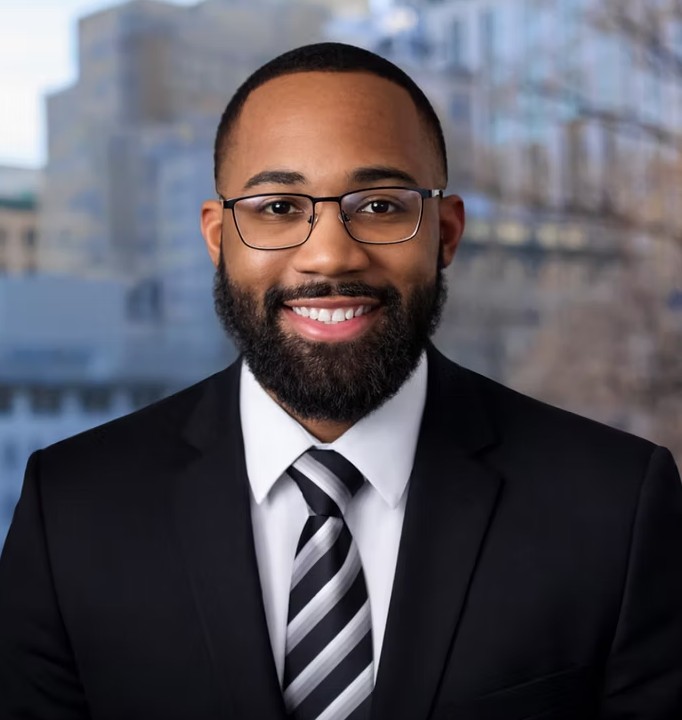
Will Smith
Two of Suffolk’s biggest needs are making sure our infrastructure and city services keep pace with growth and keeping Suffolk affordable for the people who already call it home.
In the Cypress Borough, traffic and infrastructure are at the top of that list. Cypress is the gateway to Suffolk, with residents and commuters traveling through the borough to Norfolk, Portsmouth, Chesapeake, and other parts of the region. Because of that, Cypress deserves its fair share of attention and investment in roads, drainage, public safety, and other infrastructure. Suffolk, and specifically the Cypress Borough do not look the same as it did 30 years ago, and the way we plan has to evolve with it.
I would look closely at the infrastructure impact of projects, support responsible budgeting, and work to secure state, federal, and regional funding for needs that should not fall entirely on Suffolk taxpayers. Growth should improve our quality of life, not
outpace it.
HOT TOPICS
1. There is currently a temporary ban on data centers in Suffolk. It will likely be the 2027 Council that votes on changes to the UDO (Unified Development Ordinances) regarding data centers. What do you consider to be the biggest issues that the city will need to address regarding data centers and how can that be accomplished within the UDO framework?
2. Northern Suffolk has seen a tremendous amount of growth in the past two decades, and the 2045 Comprehensive Plan adopted by Council in 2024 has added additional density to the land use in that area. The City has created some additional capacity to Rt. 17 (Bridge Rd), but there is more growth coming. Plans to expand Bridge Rd are in the CIP, but any widening of Bridge Road must necessarily narrow at the two bridges on Bridge Rd. What will you do on Council to ensure that the City can widen those bridges to truly accommodate the increased traffic from development? If the bridges can’t (or won’t) be widened, how will you approach rezoning applications for projects that will increase density in northern Suffolk? What are your views on a replacement for the Kings Highway Bridge?
Leroy Bennett
1. I supported the temporary halt on data center applications because Suffolk must establish strong protections before any applications are considered. Based on the information currently available, I am not persuaded that data centers provide enough value to justify their electricity demand, water usage, infrastructure requirements, environmental effects, and potential costs to residents.
The burden of proof should rest with the industry. Projected tax revenue and broad claims of economic development are not enough. The data would have to demonstrate a substantial net benefit to Suffolk, meaningful permanent employment, protection for residential utility customers, sufficient grid and water capacity, enforceable environmental safeguards, and full developer responsibility for infrastructure and decommissioning costs.
Without compelling evidence that overcomes these concerns, I support prohibiting data centers in Suffolk to the fullest extent permitted by law.
If data centers are not prohibited, they should never be permitted by right. The UDO should require individual legislative review, extensive public notice, meaningful setbacks, enforceable noise limits, environmental protections, independent technical analysis, and financial assurances. Each application should disclose its electricity and water consumption, infrastructure requirements, emergency response demands, permanent employment, environmental effects, and decommissioning plan.
Suffolk must also defend its local authority. The General Assembly has enacted requirements affecting energy development and considered other proposals that could restrict local land use authority. Proposals that did not pass may return in a future session. When the state restricts local authority, it also restricts the ability of Council members to advocate for their residents.
The next Council will make consequential decisions about data centers, so residents should examine every candidate’s employment, financial interests, public positions, and ability to exercise independent judgment. My opponent is employed by the energy industry, whose business includes serving large energy users such as data centers. Employment alone does not determine how he would vote, but the relationship is relevant and deserves transparency.
My position is established. I voted for the temporary halt on data center applications. Without compelling evidence that overcomes the risks to Suffolk, I support prohibiting them to the fullest extent permitted by law.
2. Bridge Road must be treated as one coordinated transportation priority. I will continue advocating for regional, state, and federal funding, reliable engineering and cost information, and appropriate developer contributions toward the improvements their projects make necessary.
Adding roadway capacity without addressing the two bridge bottlenecks will not provide the relief residents need. If widening those bridges is not feasible within a reasonable period, Council must account for that limitation when considering additional density.
Rezoning decisions should be based on existing and funded infrastructure, not improvements that are merely anticipated. When roads, bridges, schools, utilities, and emergency services cannot accommodate additional development, I am prepared to vote no, require reduced density, or defer consideration until a reliable solution is identified.
I support a safe and dependable replacement for the Kings Highway Bridge. The City must evaluate cost, environmental consequences, agricultural preservation, emergency access, traffic patterns, and effects on surrounding communities. Residents must be included before an alternative is selected. A replacement should meet a demonstrated transportation need and should not primarily be used to justify additional development.
Will Smith
1. The biggest issues are location, infrastructure capacity, neighborhood and environmental impacts, and making sure the long term benefits justify the demands placed on the city. Suffolk is still determining what responsible data center development should look like and that’s why the UDO review is important. When the UDO is revisited, it should set clear standards for where data centers may or may not be appropriate and what protections must be in place. That gives residents, developers, staff, and council a consistent framework for evaluating future proposals while protecting Suffolk’s quality of life.
2. Northern Suffolk is outside of the Cypress borough, but decisions made there affect the entire
city. I would start by listening closely to the council member representing that area, and most importantly, the residents who experience that traffic everyday. If the infrastructure cannot reasonably support additional density, that would weigh heavily in my consideration. I would also review the engineering, costs, funding options, and what is realistically achievable before committing to a particular solution.
FISCAL RESPONSIBILITY
City Council approved the Port 460 rezoning project back in 2022. It is now known that there are issues with public water to the site, stormwater management issues, and increased costs for road improvements which will be borne by taxpayers. The City is currently working on creating a fiscal impact tool that will be used for land use applications. How would you ensure that Council, staff, and the citizens have accurate information about infrastructure needs BEFORE a rezoning is approved, including long-term infrastructure and service costs that the City will incur from the development, to prevent situations like this from happening in the future?
Leroy Bennett
I voted against the Port 460 rezoning. The issues that later emerged involving public water, stormwater management, and increased road improvement costs reinforce why major development proposals require complete financial and infrastructure analysis before approval.
I have advocated for the development and use of a formal fiscal impact analysis tool. The tool should give Council, staff, and citizens a consistent method for evaluating the full financial effect of a proposed development before a vote.
The analysis must examine more than projected tax revenue. It should calculate anticipated costs for roads, schools, water and sewer capacity, stormwater management, police, fire and emergency response, public facilities, maintenance, debt service, and future infrastructure replacement. It should distinguish temporary construction revenue from recurring revenue, identify which costs will be paid by the developer, evaluate cumulative impacts from other approved developments, and be available to Council and the public before the hearing.
Developers should not receive the benefits of a project while transferring its costs to taxpayers. Within the limits of Virginia law, applicants should provide lawful voluntary proffers or other enforceable commitments that reasonably address the impacts their projects create.
The current Council composition has created greater pressure for applicants to present stronger proposals and accept greater responsibility. If an applicant’s commitments are inadequate, Council should require improvement, reduce the project’s intensity, defer the application, or vote no.
My vote against Port 460 reflects the standard I continue to advocate. When information is incomplete, infrastructure concerns remain unresolved, or taxpayers may be left carrying unidentified costs, Council should not approve the project.
Will Smith
The city already provides staff reports and supporting information through the public meeting process. I support building on that by making sure the fiscal impact tool gives Council and residents a clearer picture of the long term infrastructure and service costs associated with major land use decisions. I also believe Council members should help keep residents informed, encourage them to participate or follow the council meetings virtually, and ask the tough questions on their behalf. The goal is to make decisions with the best information available and avoid surprises that later fall on taxpayers.
TRANSPARENCY
1. Currently, meetings for the following city boards are live streamed: City Council, City Council Work Session, Planning Commission, Suffolk Board of Zoning Appeals, Suffolk Wetlands Board, and Historic Landmark Commission. The Economic Development Authority (EDA) meetings are NOT live streamed, although it is the only Council-appointed Board that is allowed to purchase, own, and sell land. Should you be elected, would you commit to ensuring full transparency of the EDA Board by streaming these meetings to allow for more public oversight? Please explain your reasoning behind your answer.
2. How will you ensure greater transparency with citizens when making decisions on key issues such as rezonings, large developments, data centers, and major spending? If your vote does not align with a Council Member whose borough will be directly affected by a certain project/issue, will you commit to clearly explaining your reasoning and the factors that influenced your decision in such cases?
Leroy Bennett
1. Yes. I support livestreaming and archiving open meetings of the Economic Development Authority, subject to closed session exceptions permitted by Virginia law.
The EDA can purchase, own, transfer, and sell property and participate in agreements involving substantial public resources. Citizens should be able to observe its open discussions, presentations, and votes without having to attend a daytime meeting in person.
Agendas and supporting materials should be posted in advance whenever legally permissible, and recordings should remain publicly available. Greater transparency strengthens public confidence and helps citizens understand how economic development decisions are made.
2. Transparency must begin before the final public hearing. Citizens should receive earlier notice, plain language explanations, accessible community meetings, and sufficient time to review traffic, environmental, utility, and fiscal impact information. Developer commitments and potential taxpayer obligations should also be clearly identified.
Council has not always voted consistently with the recommendation of the representative whose borough would be most directly affected. Over the past two years, Council has given greater consideration to that representative’s position. I believe that is the right direction because the borough representative generally has the closest understanding of the area’s residents, infrastructure, history, and community concerns.
I will give considerable weight to that representative’s recommendation. A significant citywide concern, legal obligation, public safety issue, or financial consequence may require a different vote. If I vote differently, I will publicly explain the specific reason. Unless a substantial citywide consideration requires otherwise, I believe the affected borough representative is the best advocate for that community.
Transparency must also extend to campaign contributions, endorsements, employment, and other relationships that citizens may consider when evaluating independence.
Care4Suffolk’s own records provide an objective measure of my decisions. According to the campaign finance information Care4Suffolk published, Council Member Shelley Butler Barlow received far fewer contributions from individuals associated with development than I did. Yet, based on the voting record Care4Suffolk published on July 1, our overall scores on the matters the organization selected were the same.
That comparison demonstrates that receiving a lawful campaign contribution does not mean I am beholden to the contributor or that the contributor has secured my vote. Council Member Butler Barlow and I may not have voted identically on every item, but despite the difference in contributions, our overall scores were the same. My voting record shows that I evaluate each matter independently and that no contribution guarantees my agreement, support, or vote.
The same standard should apply to every candidate. A contribution from a state official does not establish how someone will vote. However, contributions, employment, endorsements, public positions, prior service, and Council relationships remain relevant when a candidate has no Council voting record for residents to examine.
At a time when Council must address data centers, major rezonings, infrastructure demands, and possible restrictions on local authority, residents should consider the practical effect of changing this seat. The question is whether that change will strengthen or weaken the votes available to protect their priorities.
My record is not perfect, and I will not claim that every decision I made was, in hindsight, the best one. But every decision was made to the best of my ability, with the interests of the people I serve at the forefront. Residents can examine my record, evaluate my results, and hold me accountable for both.
Will Smith
1. I support transparency and public access. I would want to understand the EDA’s current practices and any legal or practical considerations involved in livestreaming its meetings, before making a commitment. If there is a practical way to expand public access while respecting legal requirements and the board’s responsibilities, I would support expanding access.
2. I believe transparency is more than posting an agenda online. Residents should receive information in a timely way and have meaningful opportunities to stay informed before major decisions are made. I would make it a priority to engage residents directly and keep them updated through multiple channels, not just social media, especially on rezonings, large developments, data centers, and major spending.
I also plan to maintain an open line of communication with my colleagues on Council. I would listen closely to the member representing the borough most directly affected, while still receiving each issue on its own merits. On major or controversial decisions, especially when my vote differs from the affected borough’s representative, I would be willing to explain the reasoning behind my decision.